mechanical training model

Bairway Trainer: modeling the biomechanics of laryngoscopy

A low-cost mechanical trainer that isolates the lift, angle, and torque of laryngoscopy, giving learners realistic force feedback that today's rigid, expensive airway mannequins don't provide.

The problem

Current airway simulators do not accurately model the biomechanical forces of the human jaw, leading students to learn incorrect form and habits — creating a skill gap that shows up as patient harm once they transition into clinical work.

Existing training mannequins are unrealistically difficult to intubate because the jaw doesn't sublux and the materials are excessively rigid, forcing learners to apply excessive force and develop poor habits like tilting back the wrist instead of lifting up along the handle. Softer, more lifelike mannequins exist, but they wear out quickly. The result shows up clinically as frequent "tooth-click" events — contact that would represent real dental injury in a patient — and intubation is a genuinely high-stakes skill to under-train: a failed attempt raises the risk of major complications by 40–60%.

intubations to basic proficiency

~50–75

intubations to ~90% first-pass

~200

cost per difficult intubation

~$14K

annual US healthcare cost

~$6B
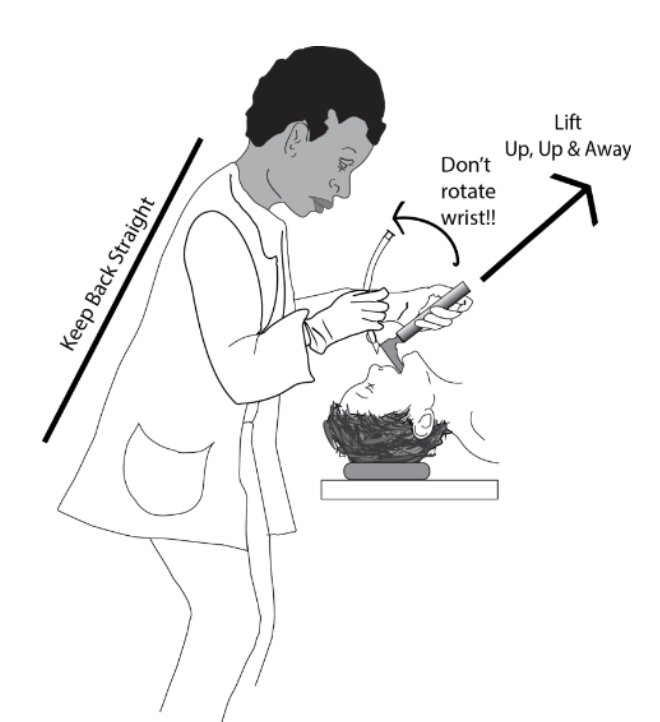
Diagram illustrating correct laryngoscope technique: keep back straight, lift up and away, don't rotate the wrist.
"Cheers, not drink" — the technique cue the trainer is built to teach

Prior art

Current airway trainers prioritize full anatomical fidelity and multi-step procedural realism — useful for classroom teaching, but not for isolating and correcting the specific force mechanics of the lift.

Life/form Airway Larry Adult Airway Management Trainerfull mannequin
Medical-X Airway Management Trainerfull mannequin
Laerdal Airway Management Trainerfull mannequin
Patent WO2017123852A1 — parametrically adjustable trainerinstrumented, unreleased

The design

Rather than chase full anatomical fidelity, the Bairway Trainer isolates the mechanical movement and force dynamics essential to safe laryngoscopy — a simplified upper-airway form paired with a mechanically responsive jaw and tongue assembly that resists the blade the way real tissue does. The tongue itself is deliberately left out; including it would add cost and complexity without helping the trainer's actual goal of teaching lift mechanics.

Correctly models jaw biomechanics under load
Cleanable and durable for repeated use
Realistic jaw and teeth representation
Manufacturable with 3D-printed, user-replaceable parts
Compatible with real laryngoscopy tools
Affordable and easy to use

Prototype revisions

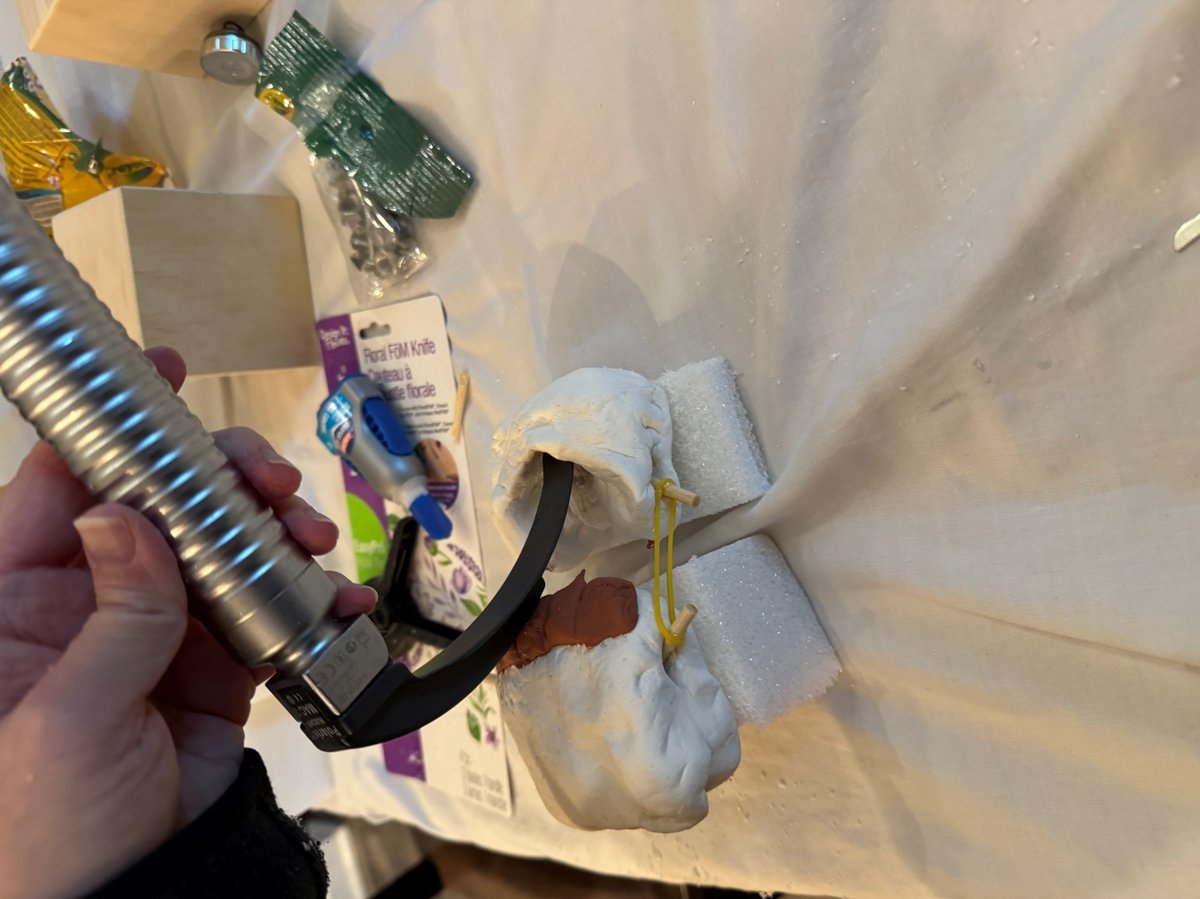
The first prototype was built from foam blocks, clay, sticks, and rubber bands, just to get the concept off paper and let others react to it — clay jaws with a color-coded set of teeth, mounted with rubber bands providing tension between the upper and lower jaw. It was never meant to be a final product, just a mechanical proof of concept.

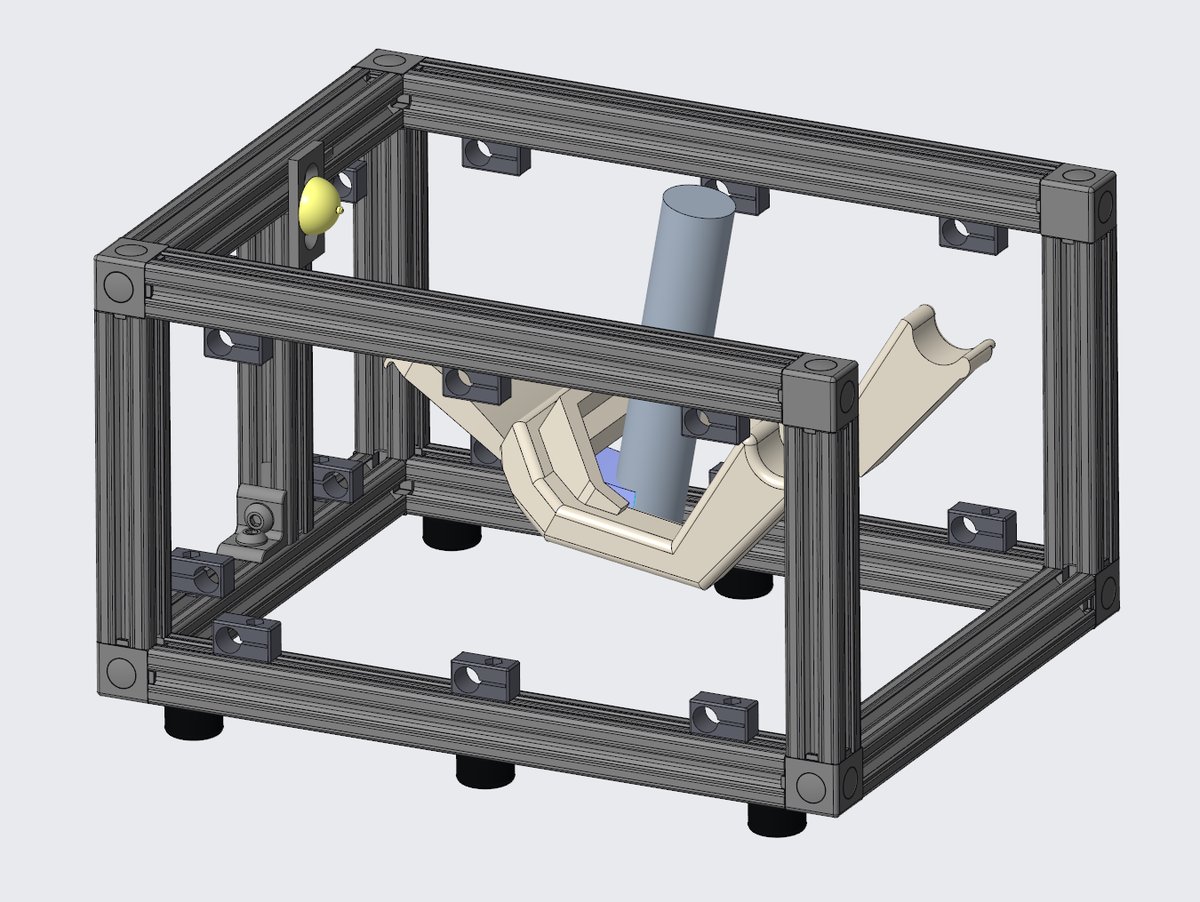
The second revision moved to a 1" T-slotted aluminum frame with a rail system, letting rubber bands be repositioned almost anywhere along the frame. That near-infinite adjustability is the point: it lets the tension points be tuned and tested with real practitioners before locking in a simplified, final attachment layout. 3D-printed lower jaw and tissue components hold the teeth and give the laryngoscope blade a realistic point of purchase.

First prototype of the Bairway Trainer, made from clay, foam, and rubber bands with a laryngoscope blade inserted.
Prototype one — clay jaw, rubber-band tension, built to visualize the concept
CAD model of the second Bairway Trainer prototype, showing the T-slotted aluminum frame, rail system, and jaw assembly.
Prototype two CAD — T-slotted frame with adjustable rubber-band attachment points

Next steps: a more anatomically accurate jaw and tissue model via 3D printing or molding, sourcing the rail hardware, and building out formal testing procedures once the physical prototype is assembled.

key words

medical simulation needs statement development market & prior art research mechanical design Creo CAD modeling rapid prototyping biomechanics 3D printing medical education airway management

Full prototype report

Problem background, prior art, functional requirements, and full prototype revision history.

Download PDF