Hydrogels are water-rich, cross-linked polymer networks, made from natural materials like collagen, synthetic polymers like PEG, or blends like GelMA, prized for biocompatibility and tunable mechanical properties that let them mimic native extracellular matrix. Their use in microfluidics has grown fast: published research on the topic rose from around 4,000 papers in 2017 to over 6,500 in 2021, and keeps climbing.
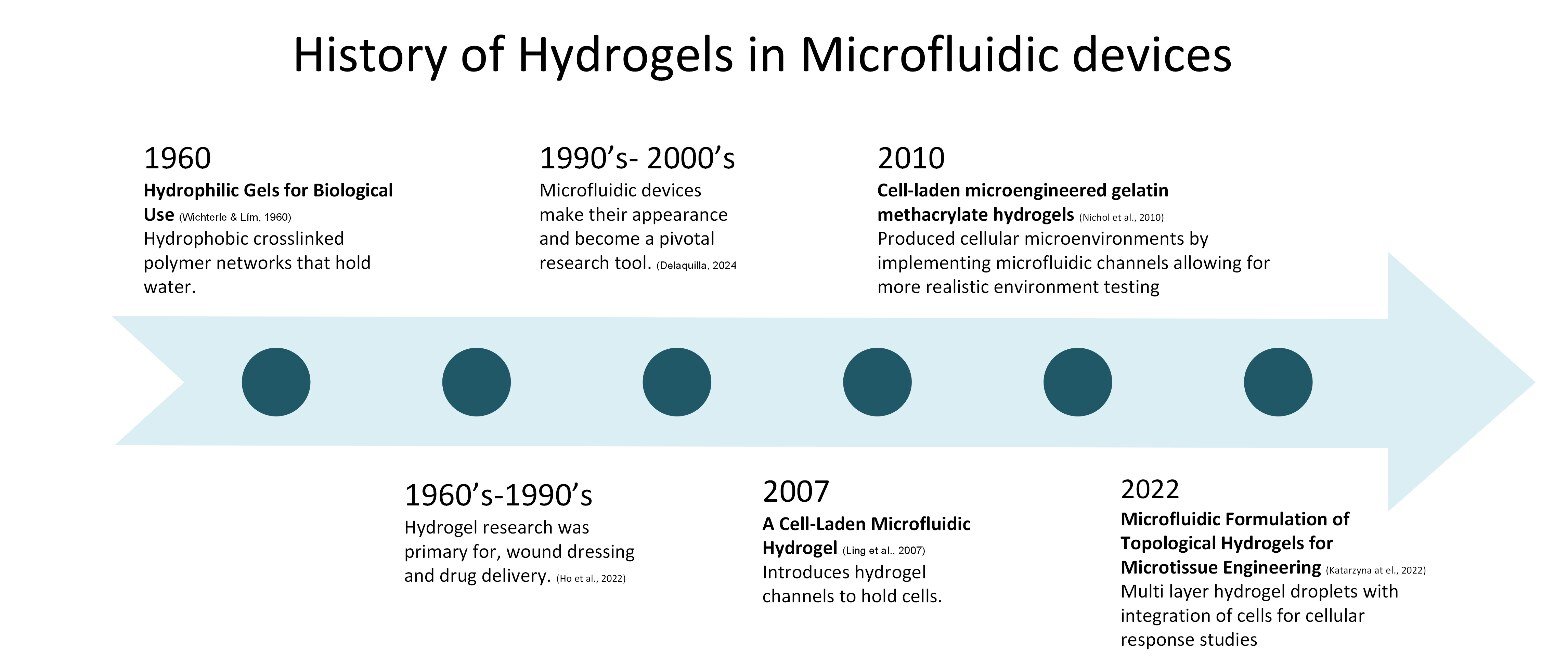
The field traces back to 1960, when Otto Wichterle and Drahoslav Lím introduced the first hydrogel for biological use. Early research through the 1990s focused on wound dressings and drug delivery; once microfluidic devices emerged as a research tool in the late 1990s and 2000s, hydrogels and microfluidics began to merge, culminating in cell-laden microfluidic hydrogels by 2007 and today's organ-on-a-chip platforms.